
Editing Reality

When I was editing a film, the difficulty did not lie so much in choosing the best images (which, as is the case with well-made things, tend to impose themselves) but rather in deciding what happened between one shot and another. The meaning, in fact, did not reside in the individual frames, but in the invisible space that separated them, in that interstitial zone where editing stops being technique and becomes language. It was there, in that apparent void, that the film truly began.
Today I work with data, but the problem has surprisingly remained the same. Only instead of shots, there are numbers, calls for bids, documents, tables, and even here, if observed in isolation, they all seem orderly: clean, correct, formally unimpeachable. However, the decisive question remains unchanged: what happens between one piece of data and another. For years I looked at public calls as everyone does, through lists, filters, maps, tools that work but resemble more a film editor left on pause than a moving film. Each bid is an isolated frame, suspended in a sort of informational limbo, unable to tell something that truly has value.
At a certain point, I realized that I was no longer interested in seeing the bids, but in editing them, that is, putting them in relation, forcing them to coexist with other numbers, other contexts, other data that were not conceived to be together. Among these, for example, are those from ISTAT, which have the flaw — or perhaps the virtue — of not being negotiable. When one starts to operate in this way, something curious happens: the system, which before appeared linear and reassuring, begins to produce friction. Small inconsistencies, deviations emerge, areas where the narrative bends slightly, not always in an obvious way, but enough to suggest that the problem is not identifying “the case,” but rather constructing a perspective capable of recognizing it when it manifests.
To reach this point, however, I had to carry out a much less romantic operation: I had to reorganize my way of working. Even before building an observatory or talking about systems, even before being able to assert that “here something doesn’t add up,” I was the one losing the bids in the background noise: endless lists, open and never completed documents, decisions postponed until they became irrelevant. It was not a problem of data, but of editing.
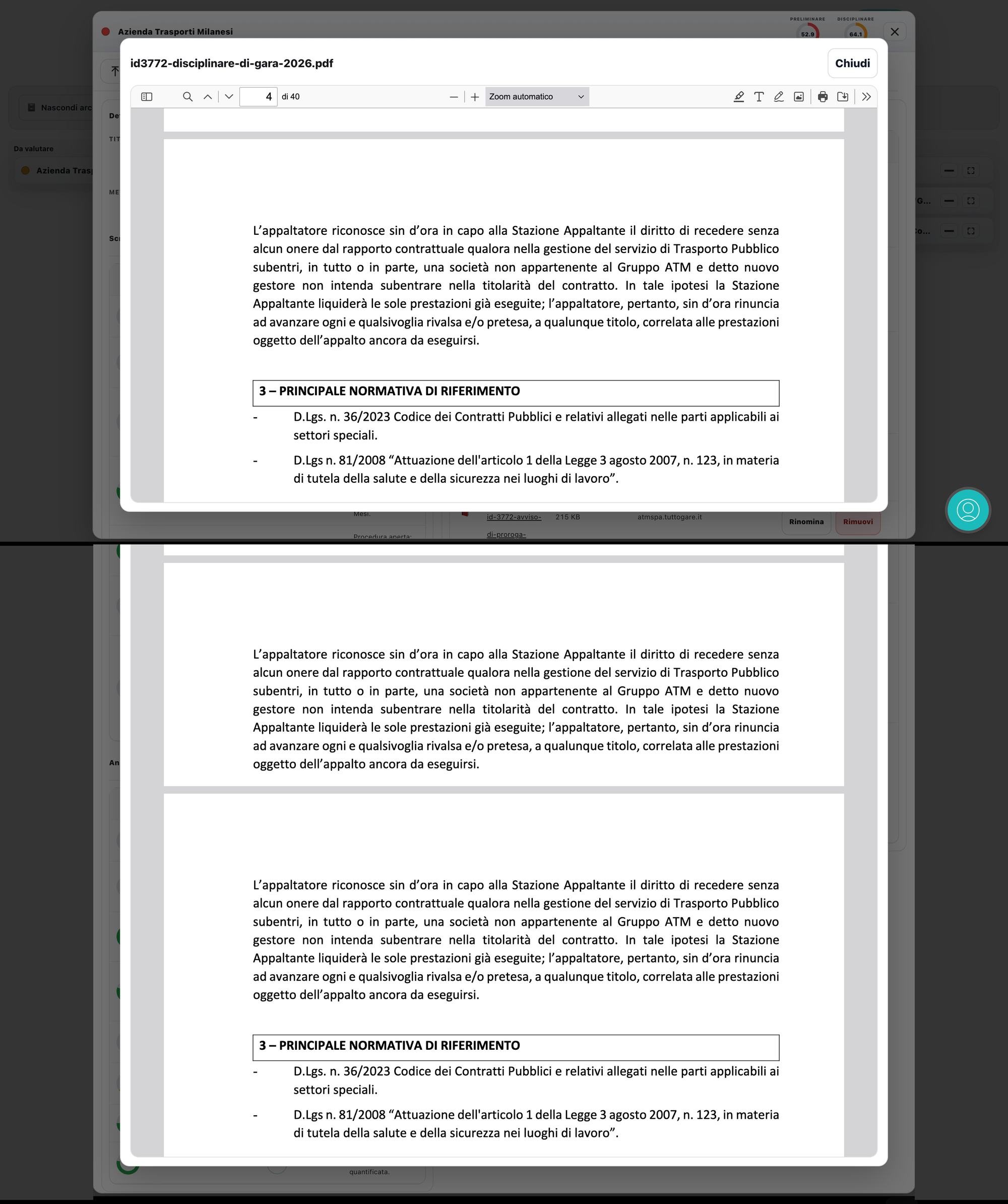
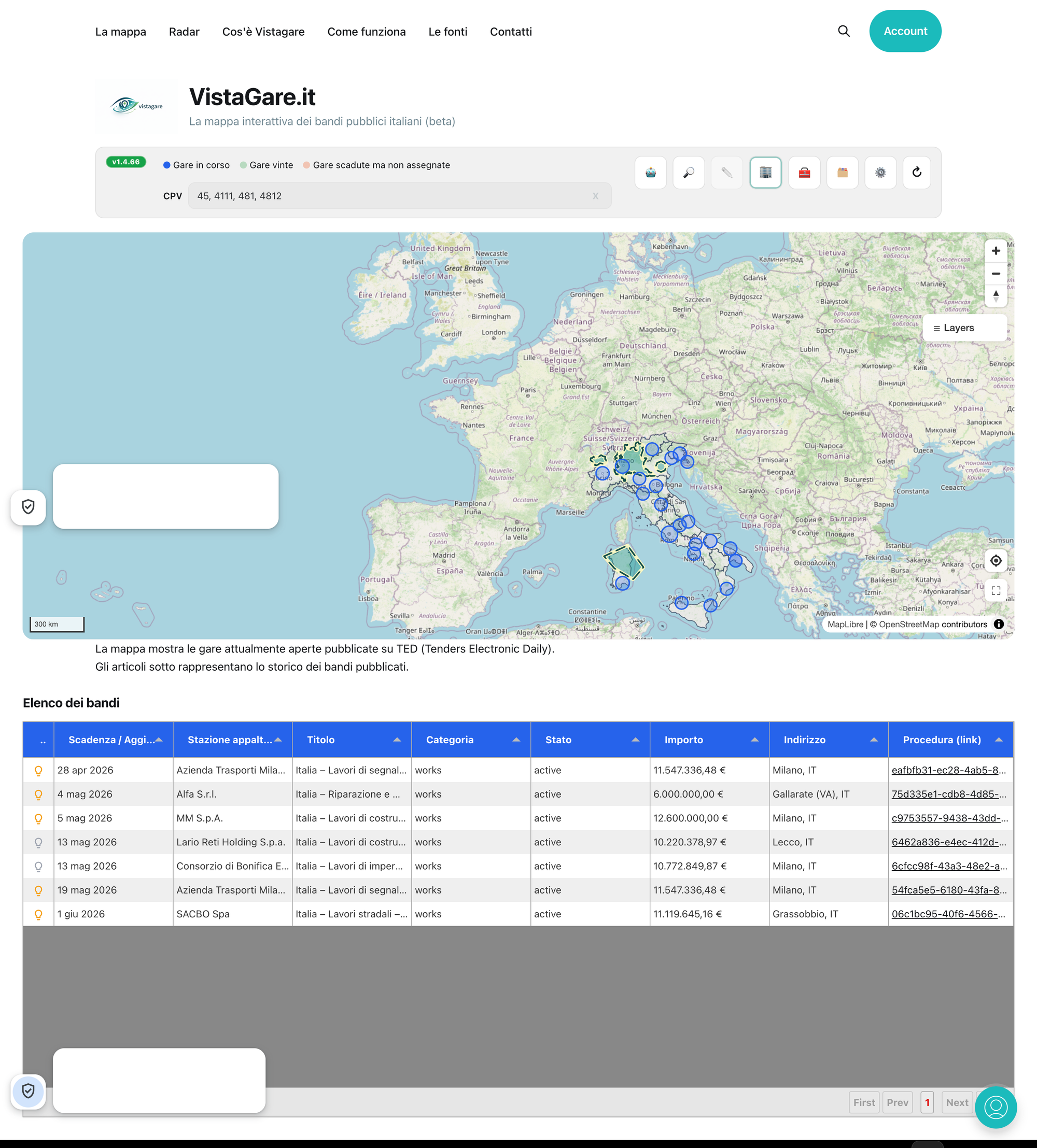
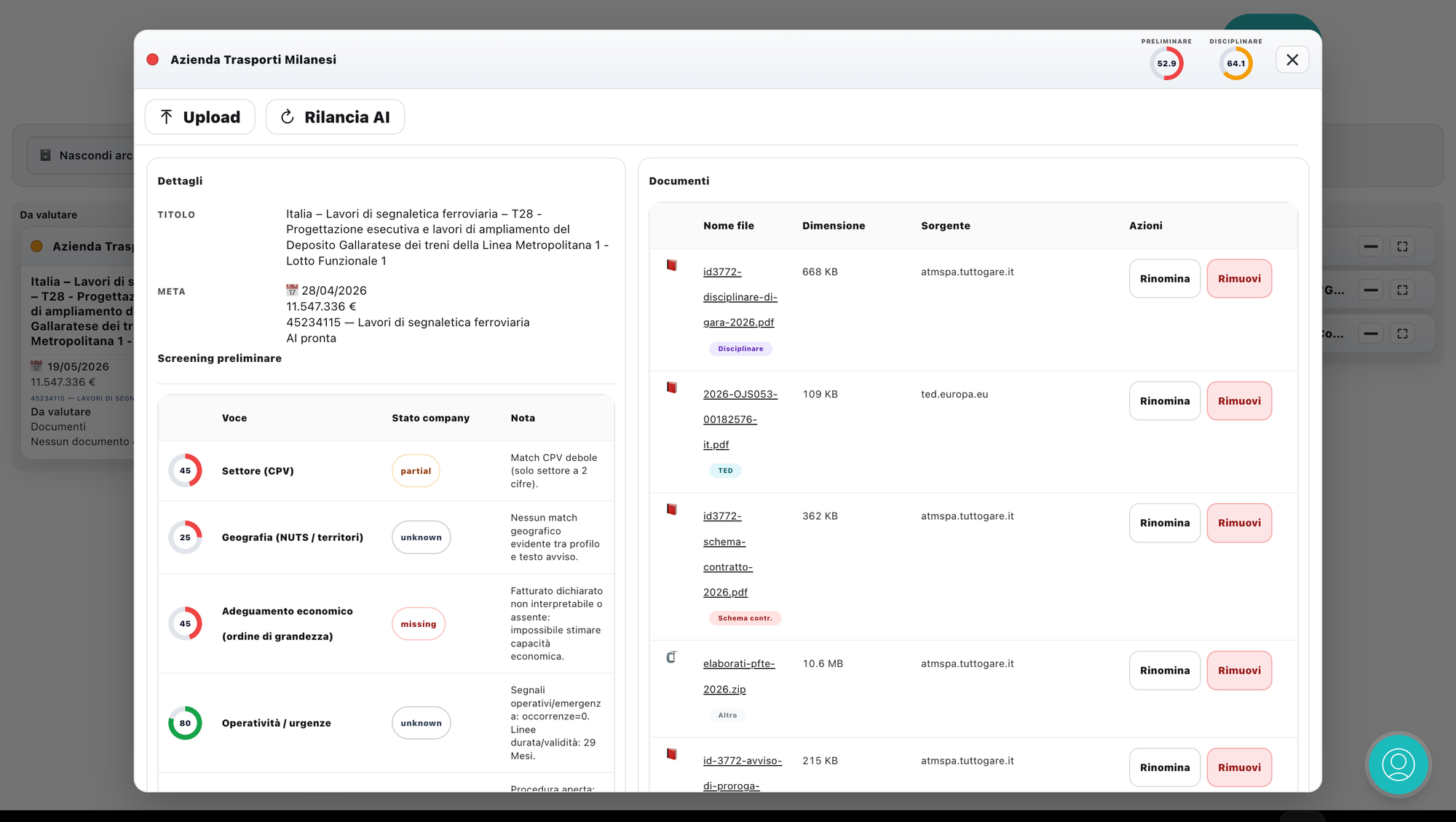
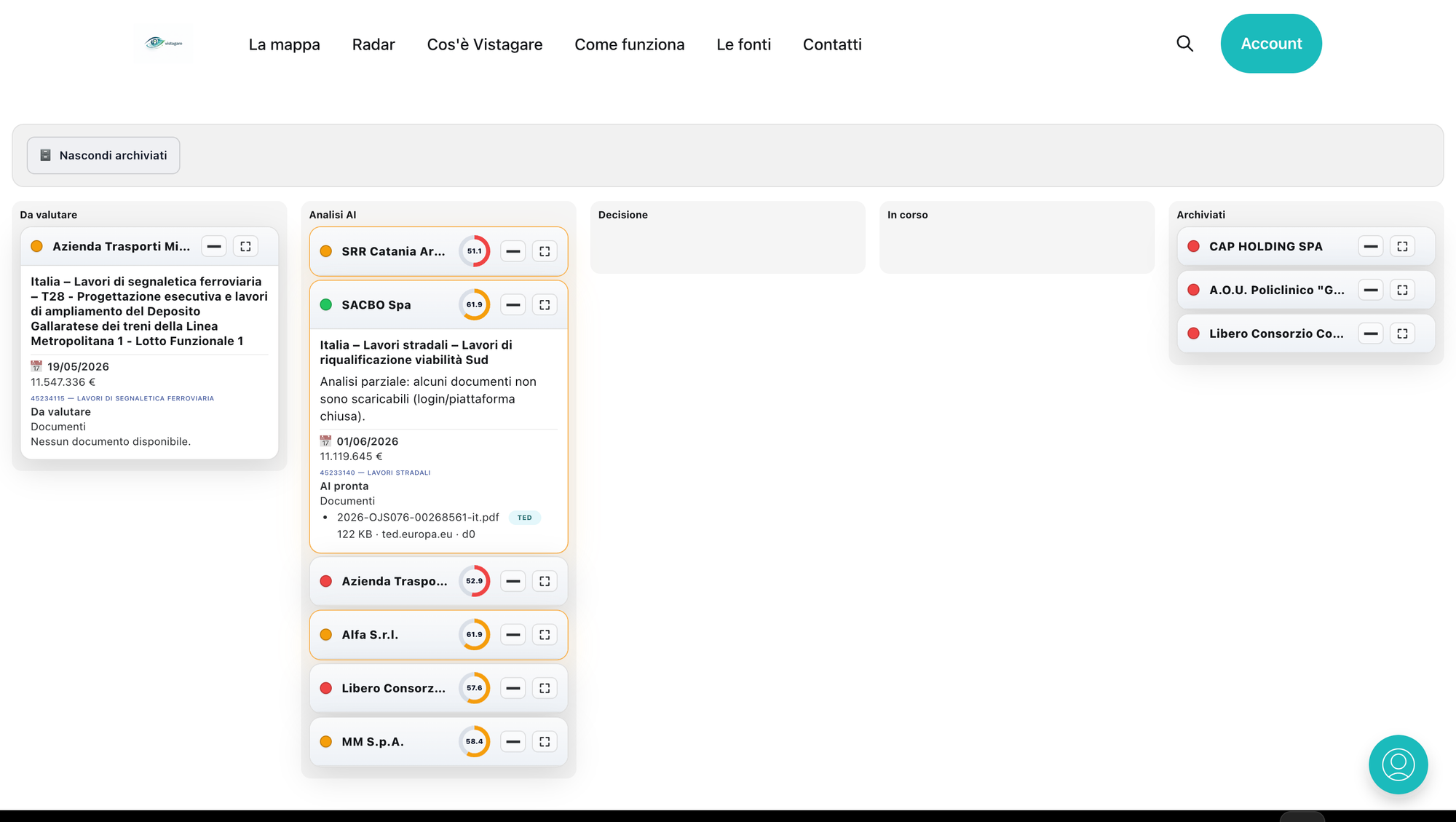
So I built something extremely simple: a light bulb, a minimal gesture — clicking it — that transforms a bid from an indistinct element to an object of attention. At that moment, the bid becomes mine and is brought into a Kanban, a finite, bounded space, with columns that do not allow the illusion of infinity. Here something fundamental happens: the bid stops, ceases to flow, to dissolve in the continuous stream of information. And while I take care of other things, a system analyzes it: it downloads the documents, transforms them into text, attempts to understand what is actually being requested, where the risks lie, which parts normally emerge too late. It is not an oracle, but an tireless assistant.
When I return, the bid is no longer opaque; it is not yet simple, but it has become navigable. At that point, I can finally carry out the only operation that really matters: decide. Move it forward or not, shift it, make it progress, close it. The Kanban, in this sense, does not organize work, but forces it to exist, preventing that subtle form of self-deception that consists in believing one has done something just because one has looked at it.
Only after building this minimal discipline, this space where things really happen, did I understand that I could take the next step: look at the system as a whole, build an observatory not to denounce or take on the role of the moralist of numbers, but simply to see. Because when data begins to be edited, when they cease to be isolated sequences and become relationships, something that I knew well from cinema happens: meaning emerges without needing to be explicitly stated. It is not always striking, not always comfortable, but it is there, and once it has been seen, it is no longer possible to pretend not to have seen it.
👉 https://vistagare.it/vistagare-radar
👉 https://tidycal.com/3oggx09/15-minuti-a-proposito-di-vistagareit
Is your project stuck at a technical hurdle?
Book 15 minutes